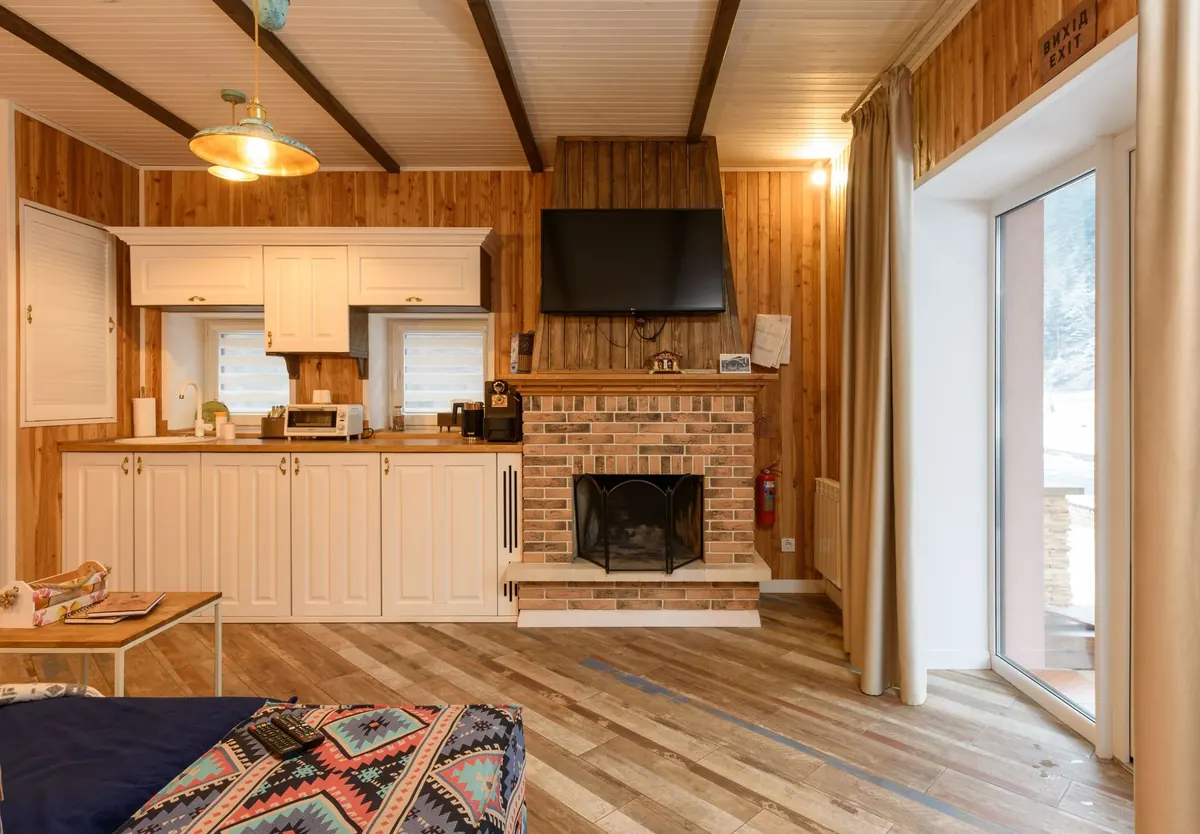
Cottagecore and modern country both look to the countryside for inspiration, but they arrive there by different routes. One is romantic, layered and a little unruly; the other is calm, structured and quietly smart. Choosing between them comes down to how you want a room to feel at seven o'clock on a dark February evening, not just how it looks in a photograph.
The Two Moods at a Glance
Cottagecore is built on nostalgia for rural making. Wildflowers in a jam jar, a dresser stacked with mismatched china, a patchwork quilt folded over the end of a bed, gingham, beeswax, open shelving, paperbacks. Nothing looks as though it arrived as a set. The style rewards gathering over time, and a little wear is part of the charm.
Modern country shares the rural grounding but tidies it up. Picture a converted barn or a Georgian farmhouse with a restrained palette, a solid oak table and straight lines. Fewer objects, each given room to breathe. Kitchens are shaker, boot rooms are panelled, and the clutter lives behind cupboard doors.
Neither is a rulebook. Plenty of British homes borrow from both, and the most comfortable rooms usually do.
Colour: Faded and Chalky vs Deep and Grounded
Cottagecore colour looks sun-bleached. Rose pink, soft sage, butter yellow, cornflower blue, cream, gentle terracotta — shades that seem to have been sitting in the light for twenty years. Walls often suit limewash or distemper, which give a soft, uneven depth that modern emulsion can't quite match. Pattern counts as colour here: ditsy florals, small checks, faded chintz.
Modern country goes deeper and more deliberate. Ink navy, charcoal, olive, mushroom, oatmeal, stone. Contrast does the work rather than blend — a dark island against pale cabinets, a slate floor beneath cream walls. Paint finishes tend to be flatter and more even, and there's usually one strong accent against a neutral ground.
If you're torn, keep walls neutral and put the colour into textiles and accessories. Cushions, throws and lampshades are cheap to swap; a repainted room is not.
Textiles and Texture
Cottagecore piles texture rather than placing it. Linen and cotton, wool, crochet, embroidery, quilts over the back of a sofa, a throw slung over one arm of a slightly sagging chair. Rugs layer on top of one another, cushions sit in mismatched sizes but a shared family of colours, and curtains might be floral with a patterned trim.
Modern country uses fewer textiles, each with more weight. A chunky wool throw, bouclé cushions, a wool rug with a clean border, linen curtains in one flat colour. Texture is tonal rather than patterned, and order matters: cushions plumped and evenly spaced, curtains hanging straight to the floor.
A useful test either way is to photograph the corner and look at it a day later. If the eye has nowhere to rest, you've added one thing too many — or one pattern too many.
Furniture, Finish and Everyday Practicality
Cottagecore furniture mixes eras freely. A pine dresser beside a painted kitchen chair, a scrubbed farmhouse table that has seen better decades, wicker baskets, a rocking chair, an armoire picked up at a salvage yard. Chipped paint isn't a flaw to fix; it's the point. Beeswax polish, iron handles and rattan do a lot of the talking.
Modern country prefers solid oak or reclaimed timber with square edges and minimal carving. Shaker kitchens, tongue-and-groove panelling, a slatted bench in the boot room, a metal-framed mirror above a console. Finishes stay consistent — limed oak, black metal, aged brass — and there's more space between pieces than you'd find in a cottagecore room.
Think about how you actually live before you commit. Both styles cope with muddy boots and wet dogs, but cottagecore hides mess in baskets and stacked shelves, while modern country hides it behind closed doors. If open shelving makes you twitchy, that's your answer.
Where the Two Styles Overlap
Both lean on natural materials: wood, wool, linen, stone, ceramic. Both prefer a working kitchen table to a dining set nobody touches. Both suit old buildings with low ceilings and uneven floors, where a low-profile sofa and a few wall lights beat anything oversized or elaborate.
The difference is quantity and neatness, not values. You can move between them with paint, fabric and a clear-out rather than new furniture.
A Quick Self-Test
Answer these honestly and the pattern usually shows up quickly:
- Faced with a bare wall, would you rather hang a shelf of mismatched china or one large print in a plain frame?
- Would you choose an embroidered, slightly faded cushion or a heavier one with a clean edge?
- Is a scratched chest of drawers better repainted in soft green, or replaced with oak?
- When a chair gets marked, do you reach for the wax or the sander?
- Does a crowded kitchen shelf feel comforting or cluttered?
- Would you rather buy four inexpensive pieces over two years, or save for one good one?
Mostly the first answers point to cottagecore; mostly the second point to modern country. A mix of both means you're a hybrid, which is the most common result and no problem at all.
Start With One Room
Pick the room you use most — usually the kitchen or the living room — and work there first. Empty it as far as you can, then decide which style leads and which supports. Cottagecore leading with modern country structure looks like a plain oak table, neat panelling and then faded florals on the chairs. Reverse it for a calmer feel: soft chalky walls with a few strong, simple pieces.
Do the paint before you buy anything. It changes the light in a room more than any cushion will. Then build in layers: flooring and rugs, then curtains, then lighting, then the small things. Keep a box for anything that doesn't fit the direction you've chosen and revisit it in a month.
Second-hand shops, auction houses and online marketplaces are where cottagecore rooms get their character, and where you'll often find better-made furniture than you would new. For modern country, buy less and buy well — a decent table, two good lamps, one rug with real weight. Give yourself a fortnight before judging the result. Rooms settle.
One practical note: if you rent, or live in a listed building, check what you're allowed to change before you start painting, panelling or replacing fittings.
Photo: Max Vakhtbovych / Pexels