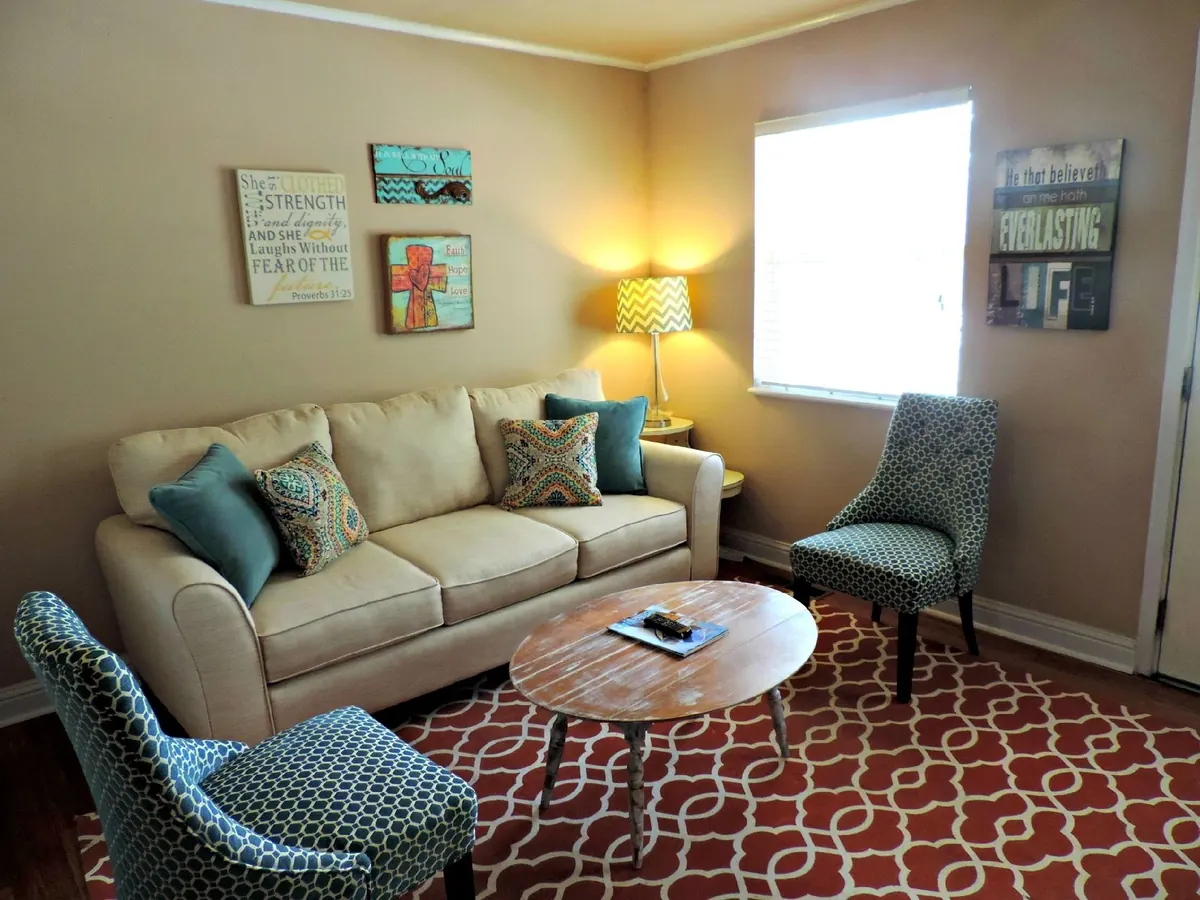
Small flats ask a lot of their floors. The same few square metres have to be a living room, a workspace and, on Fridays, a dining room. A single rug rarely copes with all three: buy small and it floats like a postage stamp in the middle of the room, buy large and you may as well have carpeted the whole place. Layering two rugs solves the problem, and it is far less fiddly than it sounds.
Why layering earns its place in a compact room
One rug has to do everything: anchor the furniture, add colour, and make the floor feel warmer underfoot. Two rugs let you split those jobs. A plain base rug does the anchoring, quietly and at a size your room can actually take. A smaller top rug does the decorating, and because it is smaller, you can afford a bolder pattern or a colour you would hesitate to commit to across the whole floor.
There is a practical bonus for renters. When you move, the expensive base layer stays useful and the accent piece can be swapped, rolled up or passed on. You are not stuck with a decision made in a hurry on a Saturday afternoon.
Sizes: the numbers that matter
The base rug
This is the one that should feel almost architectural. Aim for the largest size the room can hold while still leaving a border of bare floor — roughly a hand's width at the sides, a little more at the foot of a sofa. That visible strip of floor is what stops a small room reading as wall-to-wall carpet.
As a rough guide for UK sizes, a 120 x 170 cm rug suits a reading corner or a single armchair. A 160 x 230 cm rug works under a two-seat sofa and coffee table. A 200 x 290 cm rug is generous, but can still work in a studio flat if it sits within a defined sitting zone. The test is simple: the front legs of your main seating should sit on the base rug, not hover just behind it.
The top rug
The accent layer should be noticeably smaller — around half to two-thirds the width of the base. A 120 x 170 cm base with an 80 x 150 cm top layer reads clearly. Two rugs of similar size laid together look like a measuring error rather than a decision. Runners work well here too, particularly alongside a bed or down a narrow hallway.
Materials that behave in small spaces
Thickness is the enemy of layering. A chunky pile on top of another chunky pile creates a wobbly, trip-prone mound that catches every door and chair leg.
- Flatweave wool or cotton — low profile, hard-wearing, and chairs slide across it without a fight. Ideal as either layer.
- Jute or sisal — a good, hard-wearing base layer if you like texture, though it is scratchy under bare feet.
- Washable synthetic — sensible for the top layer in a rented flat with a cat, a dog or a habit of eating on the sofa.
- Sheepskin or a small wool piece — best used sparingly, as a third accent rather than a full layer.
- Anything deep and shaggy — save it for a single-rug room, where nothing is stacked on top of it.
The layering rules worth sticking to
- Two rugs, not three. In a small room, a third layer tips the floor into clutter.
- Contrast in scale, not in noise. One plain, one patterned. One calm, one busy.
- Borrow colour from the room. Pick two or three shades that already appear in your cushions, artwork or curtains, and keep both rugs within that family.
- Offset the top rug. Shift it towards one corner or turn it a few degrees. Dead-centre placement looks accidental.
- Furniture sits on the base, never on the top layer. Otherwise the accent rug becomes a small, strange island.
- Leave bare floor visible. If you cannot see any floor around the edges, the room has shrunk.
- Measure the doorway. A thick top rug near a door will catch every time you walk through.
Renting: grippers, doorways and deposits
An anti-slip pad under each layer is not optional in a rented flat. It stops rugs creeping across laminate, prevents curling corners, and reduces the chance of dye transferring onto a floor you do not own. If a rug arrives with a rubberised backing, check it against your flooring anyway — some backings can mark vinyl over time. A pad is the safer buffer.
Keep adhesives off wooden and vinyl floors. If you must use tape to tame a corner, test a small piece somewhere hidden first and lift it slowly. And if your tenancy agreement is unclear about what you can put down, ask your landlord or letting agent in writing before you commit — it takes five minutes and saves an awkward conversation later.
Three setups that suit small flats
- A studio with one main room: a 160 x 230 cm flatweave base under the sofa and coffee table, with an 80 x 150 cm patterned rug offset towards the window. The base defines the sitting zone; the top layer draws the eye away from the bed behind it.
- A narrow living-dining room: run a jute base down the length of the room, then place a smaller patterned rug under the dining table only. The floor stays visually continuous while the two functions stay distinct.
- A bedsit or box room: a 120 x 170 cm base beside the bed with a sheepskin or small cotton rug laid over one corner. It reads as warmth rather than as a rug that did not fit.
A quick check before you buy
Measure the space, then mark the footprint on the floor with masking tape or a folded bedsheet. Live with the outline for an afternoon and walk around it. You will spot the door swing, the awkward radiator gap and the fact that your chair legs land in the wrong place — all before anything arrives.
Buy the base rug first, put it down, and leave it for a week. Notice where your eye wants more interest, and how much bare floor you are comfortable with. Then choose the top layer with that knowledge, rather than buying both in one hopeful afternoon. That single pause is what separates a layered floor that looks considered from two rugs that happen to be in the same room.
Photo: Pixabay / Pexels