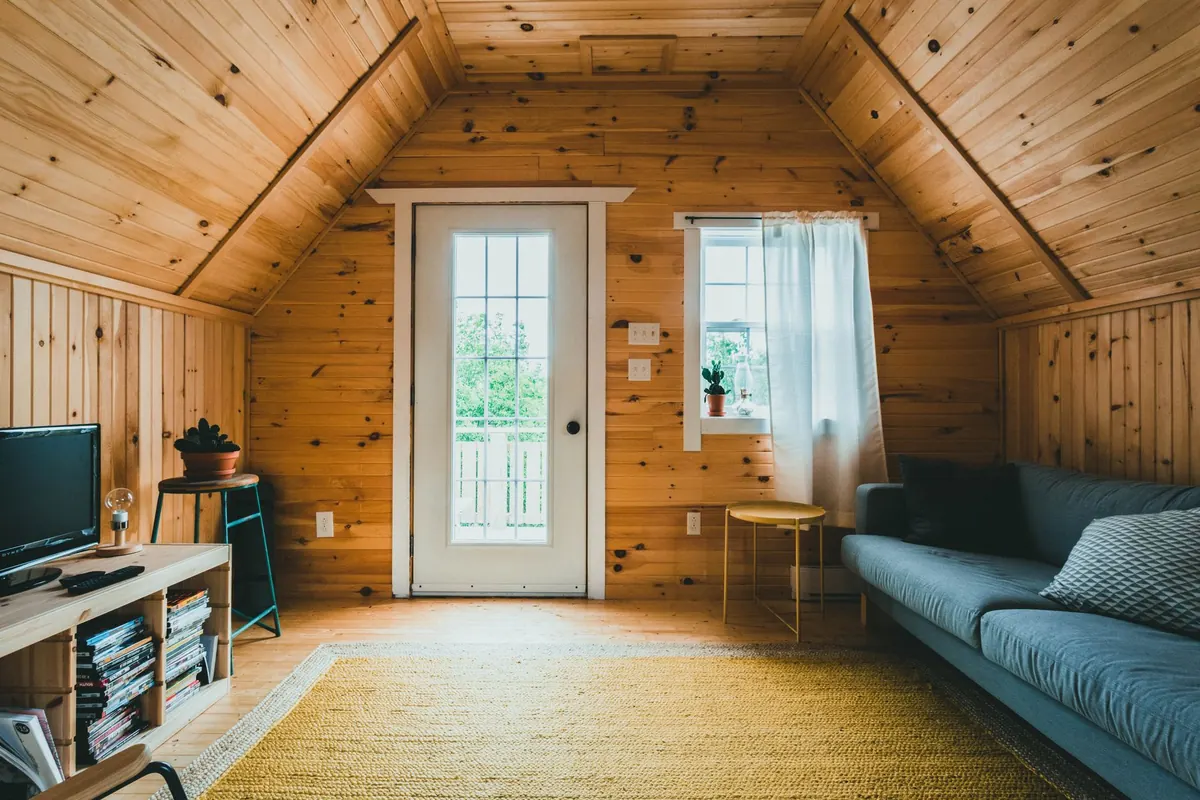
A snug is rarely generous. It might be a former dining room in a Victorian terrace, a slice of a cottage knocked through and put back together, or the corner of an open-plan room that everyone quietly claims as theirs. Whatever its shape, it tends to ask the same question: if only one substantial piece of seating will fit, should it be a sofa or an armchair? The answer depends far less on taste than on three practical things — footprint, comfort and flexibility.
Start With the Tape Measure, Not the Catalogue
Most people measure the wall and stop there. The wall is only half the story. In a snug, depth is usually what makes a room feel tight, and depth is where sofas and armchairs are surprisingly similar.
A typical compact two-seater runs about 150–170cm wide and 85–95cm deep. An armchair is roughly 80–90cm wide but still 80–90cm deep. So an armchair saves you width, not depth. If your snug is narrow but long, an armchair buys you a genuine bit of breathing space. If it is short front-to-back, neither option is going to be compact until you choose a low-back, slim-armed design.
Then add the things that live in front of the seat. A coffee table takes 40–50cm. You want 60–75cm of clear floor to walk past comfortably. In a room 3m deep, a 90cm-deep sofa, a 45cm table and a 65cm walkway comes to exactly 2m — which leaves a metre behind the sofa for a radiator, a lamp or a doorway swing. That arithmetic is worth doing on paper before you fall for anything online.
Finally, check access. Measure the narrowest doorway, the turn at the top of the stairs, and any tight hallway corner. A sofa that will not go in is an expensive mistake, and armchairs are far easier to manoeuvre.
Comfort Is Measured in Evenings, Not Cushions
Ask yourself who sits in this room, and how. Two people watching television most nights need somewhere to sit side by side without their shoulders touching. One person reading with a cup of tea needs a chair that supports the back and a lamp within reach.
A single armchair is excellent for the second scenario and awkward for the first. Two armchairs solve it, but need more width than a two-seater sofa and separate the sitters. A sofa plus a footstool is the classic snug compromise: you can stretch out alone, and you have somewhere for a guest.
Seat height and depth matter more than fabric
Sit in the thing properly if you can. A seat height of around 45cm suits most adults getting up and down; anything much lower is hard work in a small room where you are wedging yourself into a corner. Seat depth of 55–60cm is comfortable for sitting upright. Anything over 65cm encourages slouching — lovely for films, punishing for a Sunday crossword. If you are buying online, check the seat dimensions rather than the overall ones, and look for a firm cushion that will not collapse into a puddle within a year.
The Case for a Sofa
A sofa makes a snug feel like a proper room rather than a corridor with a chair in it. It gives you a place to nap, a surface for guests, and an obvious anchor for a rug, a lamp and a picture arrangement. It suits rooms where the seating sits against a wall or under a window.
To make one work in a small space, look for slim arms, a low back and legs you can see under — visible floor makes a room read as bigger. Skip corner sofas and chaise sections; they eat the middle of the room and rarely suit an awkward chimney-breast alcove. A neat two-seater with a high-ish back but narrow profile often fits an alcove perfectly.
The Case for an Armchair
An armchair leaves the floor visible, which is the single most effective trick in a compact room. It can be angled towards a fireplace or window rather than pushed flat against a wall, which creates a conversation corner from very little space. It is easier to move when you want to vacuum, easier to carry upstairs, and cheaper to replace if your taste changes.
The trade-offs are real. You cannot share it. Sprawling is limited. And if you buy one good armchair and later decide you need a sofa, you may find the armchair has nowhere to go. That is worth weighing honestly before you commit.
Flexibility: How the Room Will Change
Snugs change jobs. A room that is a study this year may become a teenager's den, a guest overflow, or the place everyone gathers when the main sitting room is taken over by a football match.
The most flexible setup in a small snug is usually a compact two-seater with slim arms, plus one lightweight armchair borrowed from elsewhere in the house. A second option is a single generous armchair with a footstool and a folding stool or bench that tucks against a wall and comes out when needed. Both give you options without permanently sacrificing floor space.
Getting the Layout Right
- Draw the room to scale. Include doors, radiators, window sills and the swing of any door. Then cut out paper shapes for the furniture and move them around before buying.
- Leave a clear path. Aim for 60–75cm between the seat and anything in front of it, and never less than 50cm to a doorway.
- Angle rather than square up. Turning a chair or sofa slightly towards the fireplace or television makes a small room feel arranged rather than parked.
- Keep a lamp within arm's reach. A floor lamp beside an armchair, or a slim side table at the end of a sofa, does more for cosiness than any cushion arrangement.
- Choose light legs and low backs. Visible floor and visible wall above the backrest both add perceived space.
- Test the walk-through. Before committing, walk the route from door to window with a tape measure held at seat depth. It is a five-minute check that saves a lot of regret.
How to Decide
If two people will use the snug most evenings, buy the sofa — a slim two-seater, low-backed, with arms you can sit on. If it is mostly one person's retreat and guests are occasional, an armchair with a footstool will feel more comfortable and leave the room noticeably more open. If you genuinely cannot decide, start with a good armchair and keep the option of adding a small sofa later; it is much easier to fit a second piece around a chair than to squeeze a chair around a sofa.
One last thing: sit in whatever you are considering for at least ten minutes, in a position roughly like the one it will occupy at home. Ten minutes tells you more than any swatch or showroom photograph. A snug is a small room, but it can be the best one in the house — it just rewards a bit of measuring before you get sentimental.
Photo: Jonathan Cooper / Pexels